

Opening the plastic bin that holds old cameras that I almost never use but just hang on to: my first every digital camera, the semi-pro Fujifilm model with 3 megapixels (does that still work?), a Sony digicam with underwater case, …
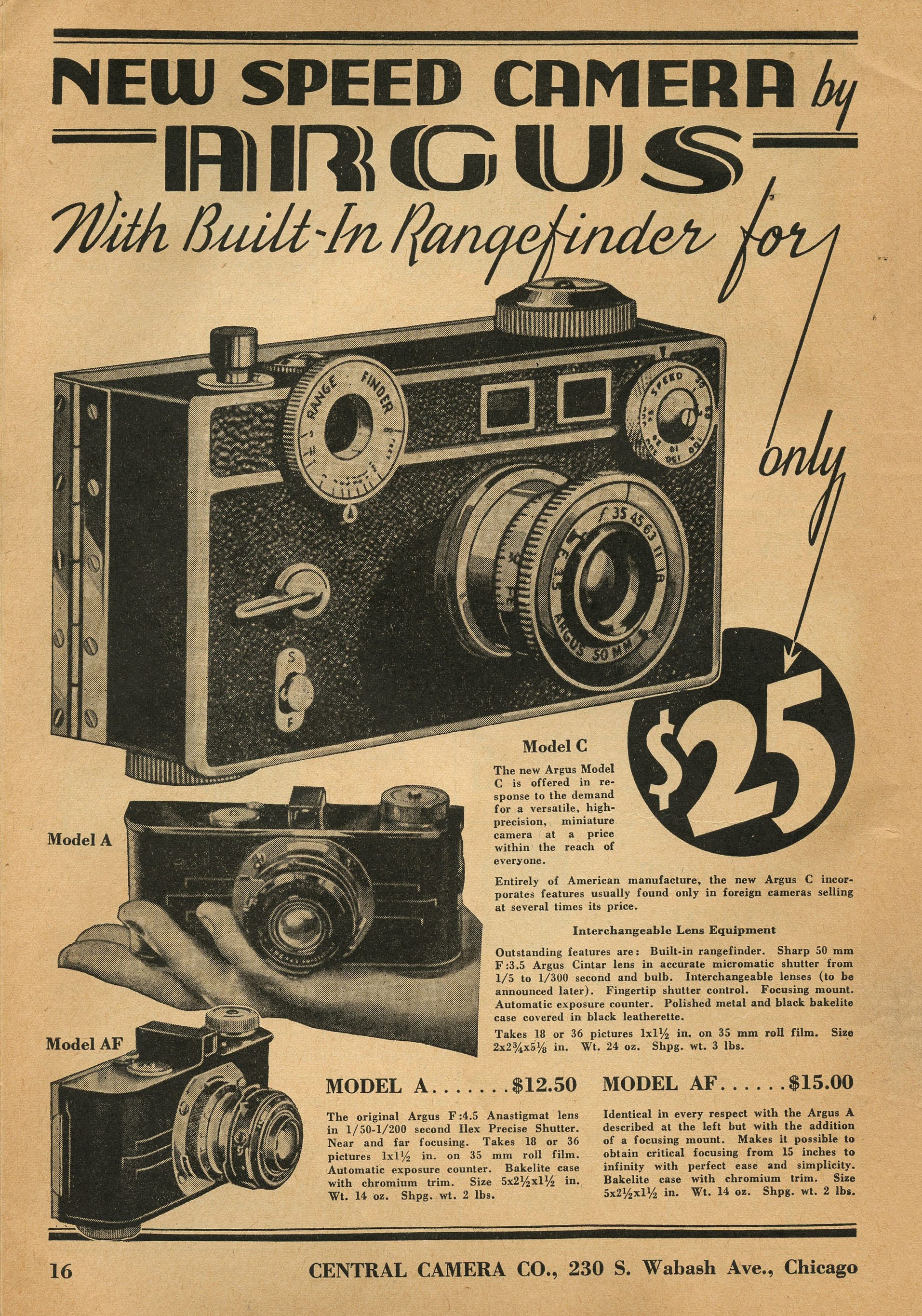
There it is - black leather(?) case with musty white stains. Flip open the top, unscrew the ¼-20 screw that secures the camera to the bottom half; it doesn’t stay with the case, just falls out into my hand. The Argus A. Looking a lot like it did when I found it in a box of gear that I bought from a guy who posted on Craigslist. It was the Leica Barnack camera in the box that brought me to the parking lot to meet up. Things were safer back then, or at least I got lucky more than most. The Leica was worth the trip, but I’ve honestly lost track of which of my Barnacks it is. The Leica had quality, history, class, very different from the Argus lurking there at the bottom of the box.
The Argus A - low-fi from its beginning, which was somewhere around 1940. The body is made from Bakelite. Do you know what that is? It’s plastic from before plastic was a thing. It has a viewfinder with no function other than to give you an idea of what a rectangle looks like around a scene. Maybe roughly the scene your lens will capture. But, here’s the thing: it has a real shutter and a glass lens with an aperture and shutter speeds that you can set. And it takes 35mm film that you can still buy today, film that at today’s prices means a single 24 exposure roll is worth more than the camera. It’s easy to load the film. Self explanatory. The only trick is the little silver button on top that stops the winder rotation for every shot (including those on the exposed leader of film). You just move that over a little and wind on. And you can rotate the film counter to zero once you’re satisfied that you’re past that leader.
Oh, you may wonder about focus. If you’re in the know about cheap cameras, you may be thinking “fixed focus?” No way, baby, not on my Argus. It has two-position fixed focus. When you extend the lens and shutter assembly from its collapsed state, you can let it stop at the base plate. Do try to pick a rotation that allows you to reach the shutter release. You have an infinite number of rotational positions to choose from. The camera doesn’t care. In this position, it’s set for long-distance focus (18/-infinity). If you want closeup (not macro, but anywhere in the range of 6’-18’), just let the spring-loaded lens assembly click into the detent and slide just a little further forward. Just make sure you can reach the shutter release.
I did all of this back in August, on the 26th of August to be exact, meaning that it’s the 26th Argust Day in recorded history. You see, they started on August 1, 2001. Each year, Argust Day advances by one day on the August calendar.
What happens on Argust Day? Well, a great number of us Argus owners (I would say fans but I’m not really that) grab an Argus camera and shoots some pictures. And when I say a “great number,” I mean tens of us. We take that leap of faith in pre-mid-20th century technology, pop out the lens and shutter, and expose some film. Then, some days or weeks later, we cross our fingers, open the envelope or maybe even wet developing tank, and see what (if) we got. It’s always a bit of a surprise for me when I do.
Assuming we do get images, we then select up to two and email them to a kind soul who posts them online so that we can share and see what others like us have captured. Here’s a link to the page.
I want to be fair to the real Argus fans out there. Some of them really know all about these cameras, and they were fine cameras in their day. For me, my Argus A is an anachronism, a survivor of time, but not without its scars and blemishes.
Back to those images we select and share. You saw one of my two selections in the opening of this article. It’s of a dear friend who was willing to let me immortalize her on an already immortal camera. She was actually impressed with the outcome, so much so that she gave me permission to share it.

Above is my other selection for the 2026 post: murky, washed out, a candid image of someone I don’t know having lunch. But just look at the mystery and emotion. Ha. Okay, just look at the poor framing. I didn’t even raise the Bakelite rectangular finder to my eye.
I’m including some more images below from the same roll, all shot on Argust Day.
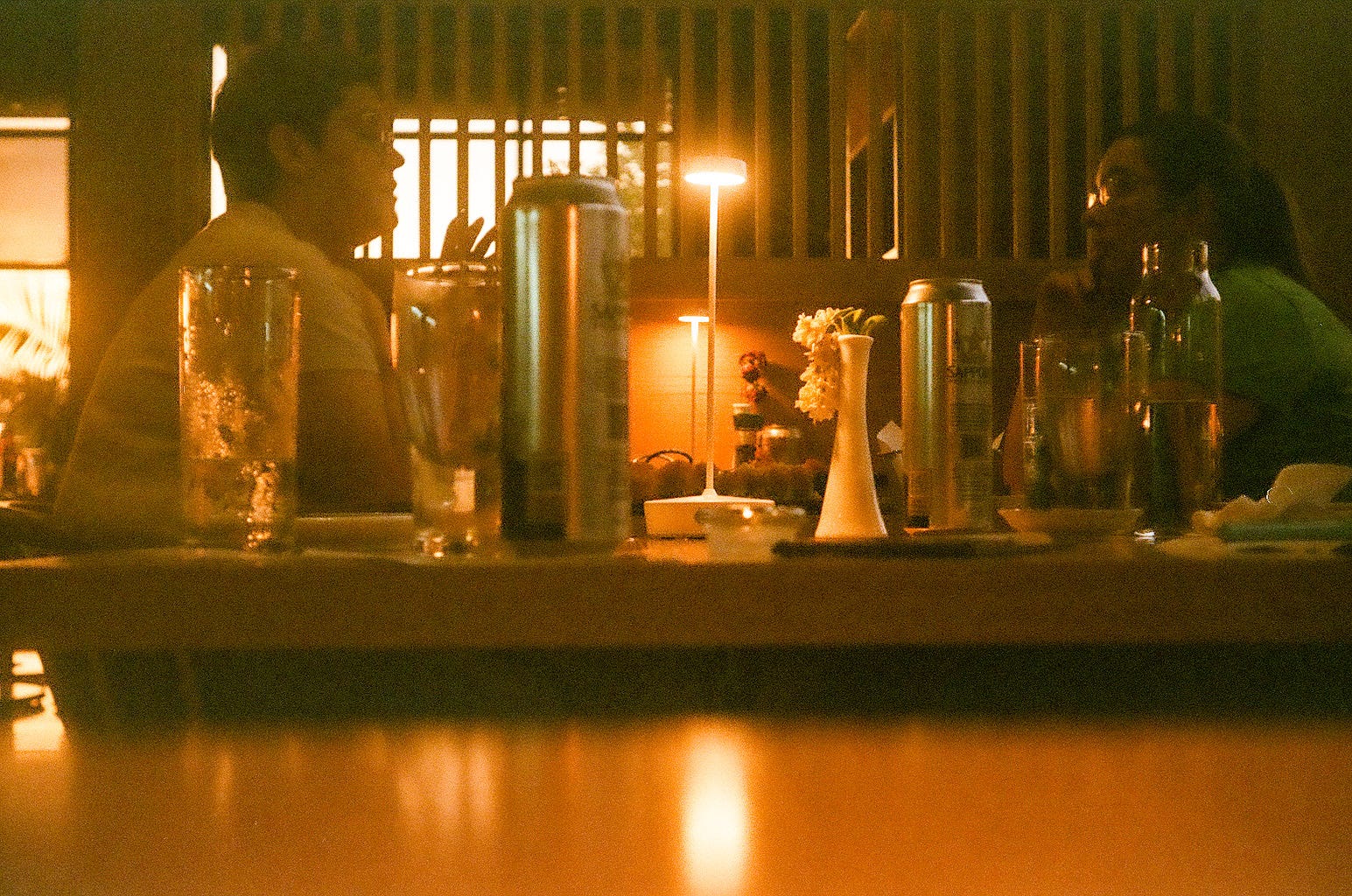
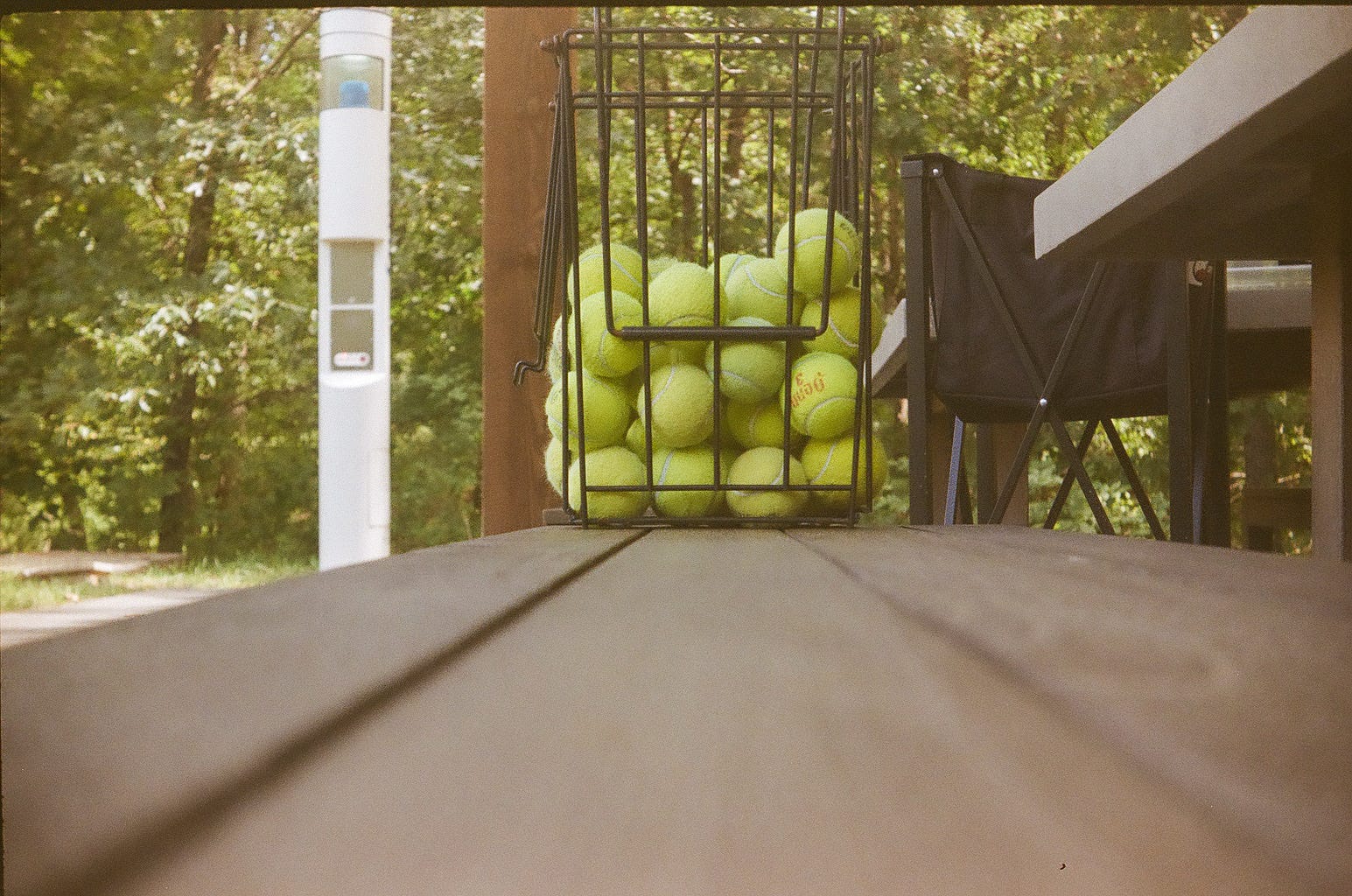

Five “keepers” from one >10 years expired roll of drugstore film (24 exposures). Drugstore film is just that. Did you know that drugstores used to sell 35mm film? And it was about $2 per roll. And “keepers” is a term I use loosely in this case. But, they’re fun to me.
So, while I’m on the subject, why is this Argust Day thing fun at all? It is kind of a lot of work and involves some time and money risk, actually. Well, if you’re here reading the Why Film? Project, you may understand. It’s all about consistency. Even crappy, random, consistency. And maybe not all that consistent.
You see, I have been doing this for quite a few years. Not every year. But always on Argust Day. This year, I went through some of the past year’s images on the website just to see what I’d done, always with the same Argus A, in the past.
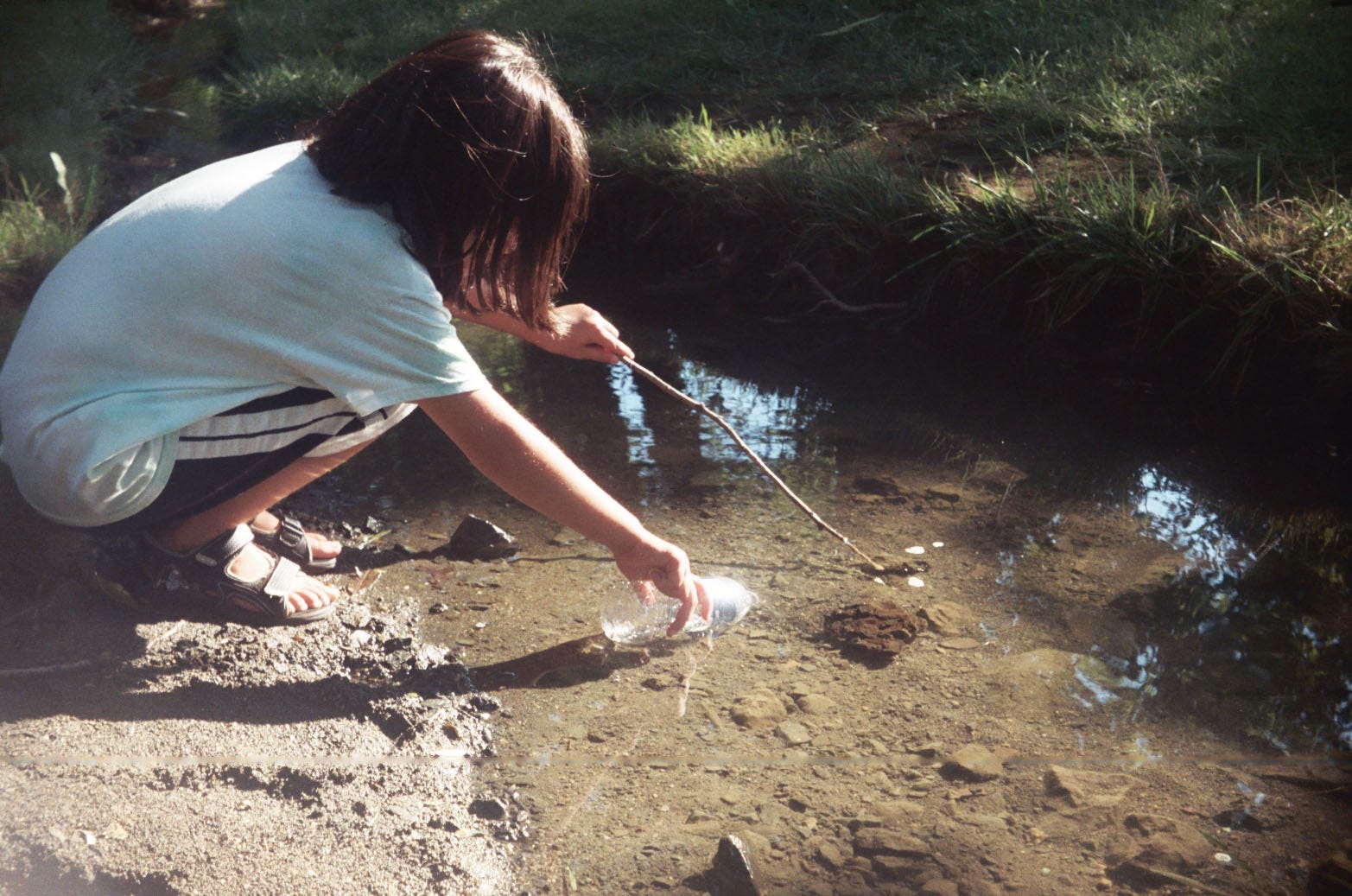
I came across this. From Argust Day 2011. Now this is fun. This is my daughter, at ten years old, in the process of catching crayfish in a little stream. She was successful so we got to look at the little guys in that water bottle before letting them go back on their merry way. This image doesn’t need to be higher fidelity to bring me right back to that moment. My daughter’s 25 years old now. That makes this whole silly process really fun.
So, this is yet another twist on “Why Film?,” one that I wish for each of you in your own way. “Fun” isn’t specific enough. Film photography for me is a rich experience, even when done in the simplest ways.
I enjoyed this so much I subscribed, even though I'm drowning in emails. But yours will be worth it! Great post here, being an Argus fan myself and having just participated in my first ever Argust Day. Thanks for read, Reed! :-)
Nancy